



Reading the Stars and the Lines of the Hand: Gain Counsel and Deep Clarity via Vedic Astrology & Palm Reading Sessions
People have always wanted answers. Why is the event happening? What comes next? Long before the internet, they sat with trusted readers and asked those same questions out loud. Vedic astrology & palm reading sessions draw from those old traditions. The aim isn’t to hand someone a script. It’s to help them see their patterns more clearly.
Some visitors arrive at a real crossroads—a breakup, a stalled career, a big move on the horizon. Others just feel curious. An astrological and palm reading practitioner leads every session, bringing years of hands-on study in both methods. Would you like to learn about how each one works and what a typical session looks like in plain language? Keep reading to gain more insights into the various practices involved.

What Happens During a Vedic Astrology & Palm Reading Session
Every session follows a loose structure, though the direction shifts based on what the visitor brings to it. A typical appointment covers:
- An opening conversation about current concerns or questions
- A review of birth details to produce the Vedic chart
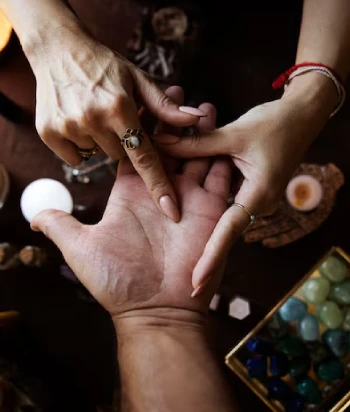
- A close look at both palms, usually starting with the dominant hand
- A comparison of planetary periods against what shows up in the palm
- Practical takeaways—patterns worth watching, timing worth noting, things to sit with
- An open window for questions at the end
The Vedic astrology & palm reading sessions happen both in person and online. For remote appointments, please send clear photos of both palms taken in natural light beforehand.
How Vedic Astrology Actually Works
Vedic astrology is also called Jyotish, a Sanskrit word that means “science of light.” It goes back thousands of years and comes from ancient India. A reader needs three things to build a chart: date of birth, time of birth, and place of birth. Those details show where each planet sat in the sky the moment a person arrived in the world. The Vedic system tracks actual star positions rather than seasonal shifts, which is how Western astrology works. That’s why a person’s Vedic sign often sits one step behind the one they’ve read in horoscope columns their whole life.
The chart breaks into twelve houses, each one tied to a different part of life, like work, health, relationships, or finances. On top of that, planetary periods called dashas highlight different themes at different points in life. A reading tries to make sense of how all those layers come together.
What a Palm Reader Actually Looks At
In the Indian tradition, palm reading carries a formal name: Hast Rekha Shastra. A trained reader doesn’t jump straight to the lines. First, they study the hand itself: its shape, size, the length of the fingers, and the feel of the skin. All of that carries meaning before a single line gets examined. The heart line speaks to emotional patterns and close relationships. The headline points to how a person thinks and reaches decisions. The lifeline gets misread constantly; it has nothing to do with how long someone lives. It reflects energy and marks turning points across different stages of life.
Below the fingers are raised areas called mounts, each one connected to a different planetary energy. One more thing worth noting: palm lines change gradually over the years. A reading at thirty looks different from one at fifty. That makes it a living record, not a frozen verdict.
Why These Two Methods of Vedic Astrology & Palm Reading Work Well Together
There’s a real reason Vedic astrology & palm reading often get used side by side. The birth chart is a fixed map. It captures what was present at birth and doesn’t shift. The palm is different. It changes over time, shaped by decisions, habits, and lived experience. When both methods point in the same direction, that tends to carry weight.
A strong tenth house in the chart paired with a clear fate line on the palm, for example, often turns up in people with a strong pull toward their chosen work. When the two seem to point in opposite directions, that gap is worth talking about. It raises useful questions about where natural tendencies and actual choices might have drifted apart. An astrological and palm reading practitioner draws on both to keep readings grounded rather than abstract. The focus stays on helping someone think more clearly — not on making choices for them.
A Practical Starting Point
The practices of Vedic astrology & palm reading aren’t about pinning down the future. They’re about gaining perspective. The birth chart offers a kind of starting blueprint. The palm shows how that blueprint has been lived in over time. Neither one locks anything down. Together, they offer a useful vantage point for anyone working through a tricky period or simply wanting to understand their patterns a little better. Booking a session with Astrologer Raya is the first step—low pressure, no promises, just a closer look at what the chart and the hands might reveal.
Frequently Asked Questions
An approximate time is still useful. A larger margin of error mostly affects the rising sign and house placements. If the time is completely unknown, a process called birth time rectification uses major past life events to estimate a likely birth window. It takes extra preparation, but it meaningfully improves how accurate the chart turns out.
Both hands get looked at. The dominant hand usually reflects how things are unfolding right now: choices made, habits built, and paths taken. The other hand tends to show inborn traits and early tendencies. Reading both gives a fuller picture than sticking to just one.
No. Some readings mention optional practices wearing a certain gemstone, repeating a mantra, or carrying out a small act of charity. These come up as possibilities, not instructions. Plenty of people take the insight from a session and skip the remedies entirely. The reading holds value on its own.
Once a year works for most people. Many times, it’s around their birthday or the opening of a new dasha period. Since palm lines shift slowly, an annual visit often surfaces changes that are easy to miss in everyday life.
Yes, completely. Privacy applies to everything that was discussed during the session, including birth details and palm photos. No information is shared outside of the session without explicit, direct permission.